
Why Your AdSense RPM Is So Low in 2026
Most publishers are seeing lower AdSense RPM in 2026 even with stable traffic. This guide explains the real reasons behind RPM drops and how premium ad networks can help increase earnings through better demand, fill rate, and competition.
AD-PERFORMANCE ISSUES
Veronica
5/10/20262 min read
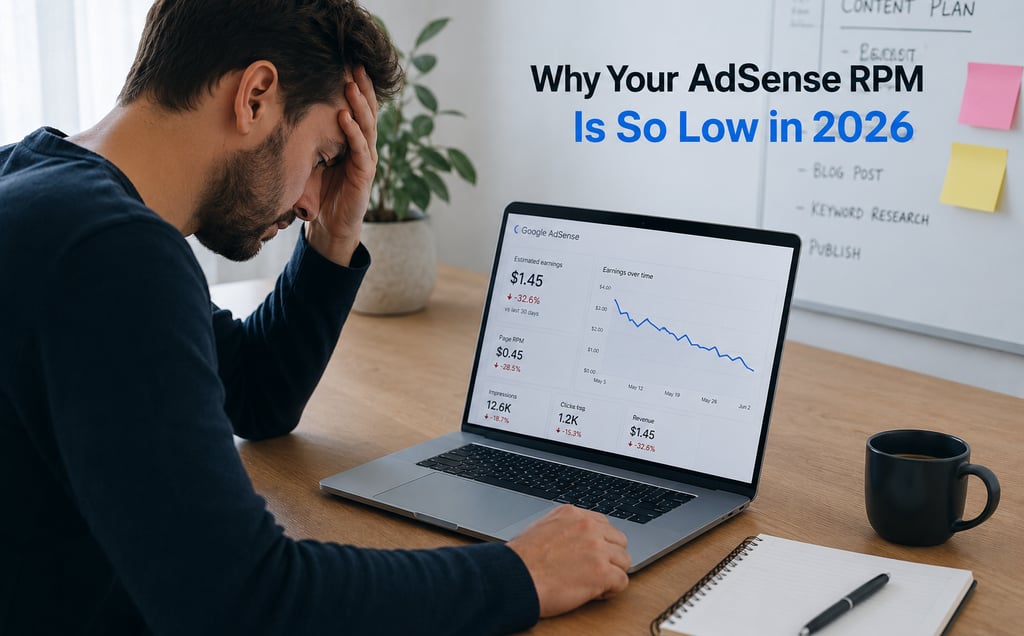

If your AdSense RPM has dropped recently, you’re not alone.
Many publishers are seeing declining revenue even when traffic stays stable or increases. This is one of the most frustrating problems in website monetization today.
The issue is usually not your traffic, it’s how your inventory is being monetized.
1. Why RPM drops happen
RPM (Revenue per 1,000 impressions) depends on:
advertiser demand
user geography
ad placement quality
competition for your ad slots
If any of these weaken, RPM drops even if your traffic stays the same.
2. Traffic quality matters more than volume
A common misconception is that more traffic = more revenue.
But:
Tier 1 countries = high RPM
Tier 3 countries = low RPM
So 10,000 visitors from low-paying regions can earn less than 2,000 high-quality visitors.
Best way to know the tier that your traffic falls under, is by adding Google Analytics to your website. This will allow you to see the geography of your traffic of which you could then take the country name and search it up on google. (e.g. "What tier country is Monaco")
3. Limited demand is the real problem
AdSense alone does not always fill all ad impressions at the highest price.
This leads to:
lower bids
unused ad inventory
unstable RPM
This is called a fill rate limitation problem, which is when an ad network or monetization setup cannot fill all available ad impressions with paying ads.
4. Premium demand changes everything
Higher-tier ad networks (such as AdPlunge) solve this by connecting publishers to:
multiple SSPs
programmatic bidders
header bidding demand
This increases competition for your ad space, which often raises RPM significantly and helps with higher fill rates on your website, overcoming the fill rate limitation problem.
5. What publishers usually do wrong
Most publishers:
rely on one monetization source
don’t optimize placements
don’t test multiple demand sources
This keeps earnings capped.
6. What a better approach looks like
Instead of relying on a single ad provider, publishers increasingly use premium demand aggregation to maximize yield.
Networks that connect multiple demand sources often outperform single-stack setups.
One example of this model is AdPlunge, which focuses on connecting publishers with premium demand sources like AdX and major SSPs to help improve RPM and fill rate performance.
Conclusion
Low RPM is rarely about traffic, it’s about monetization efficiency.
If you’re relying only on AdSense, you may be leaving revenue on the table.
© 2025. All rights reserved.