
Why January RPM Crashes
Many publishers experience a sharp drop in RPM and ad revenue every January after strong Q4 earnings. In this article, we explain why January RPM crashes happen, how advertiser budget resets and weaker bidding competition affect CPMs and fill rates, and why these seasonal declines are a normal part of digital advertising. Learn what causes post-holiday revenue drops and how publishers can better prepare for long-term monetization growth.
MONETIZATION STRATEGIES
Matt
5/28/20263 min read
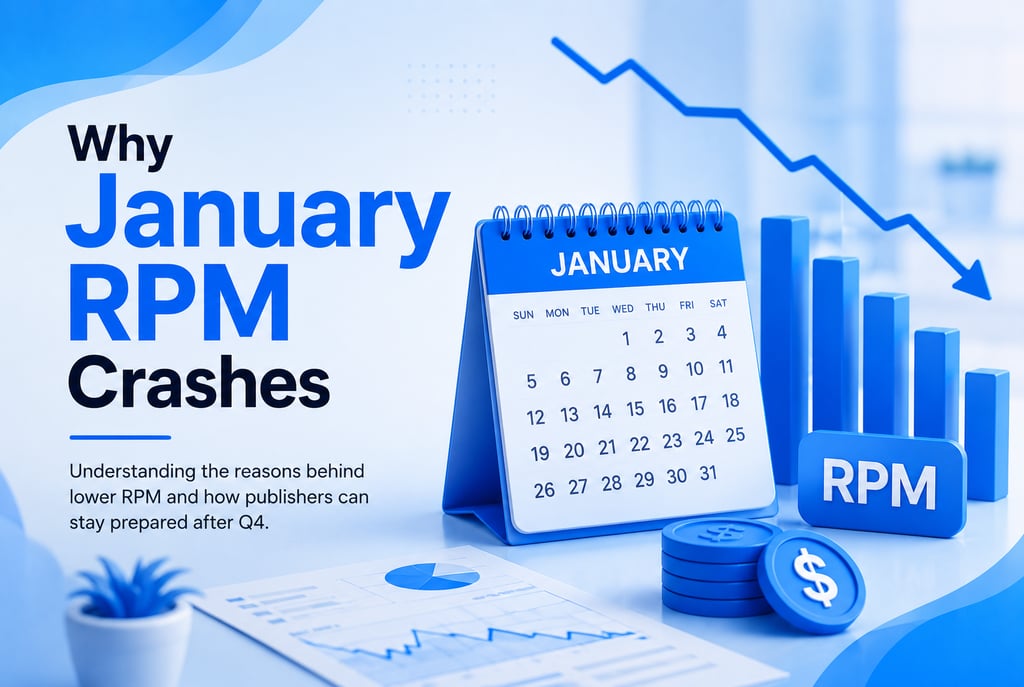
For many publishers, January is one of the most frustrating months of the year.
After experiencing strong earnings during Q4, revenue suddenly drops, sometimes dramatically.
RPM declines can feel shocking:
CPMs fall
fill rates weaken
daily earnings decrease
advertiser demand slows down
Many publishers panic and assume something is wrong with their website or monetization setup.
But in reality:
January RPM crashes are one of the most normal patterns in digital advertising.
Understanding why this happens helps publishers better prepare for seasonal revenue cycles and avoid making emotional monetization decisions after Q4 ends.
Why January Feels So Different After Q4
To understand January RPM declines, you first need to understand what happens during Q4.
During:
October
November
December
advertisers spend aggressively because of:
Black Friday
Cyber Monday
holiday shopping
end-of-year sales targets
This creates:
extremely strong advertiser competition
higher CPMs
increased fill rates
elevated RPMs
For many publishers, Q4 becomes the highest-earning period of the year.
Then January arrives.
And everything slows down.
Advertiser Budgets Reset in January
One of the biggest reasons RPM crashes in January is because advertisers reset budgets after Q4.
During the holiday season, many brands spend aggressively to maximize sales.
By January:
campaigns end
budgets decrease
advertisers reduce bidding activity
marketing spend slows significantly
This creates weaker competition in programmatic ad auctions.
As advertiser demand drops:
CPMs decline
RPM falls
publisher revenue decreases
Consumer Spending Slows Down
January also tends to be a weaker consumer spending period.
After holiday shopping:
consumers spend less
purchasing activity slows
conversion rates often decline
Advertisers respond by reducing:
campaign budgets
bidding intensity
acquisition spending
This directly impacts publisher monetization performance.
Fewer Advertisers Competing for Inventory
Programmatic advertising operates through auctions.
When fewer advertisers compete:
bids decrease
inventory value falls
RPM declines
Q4 creates one of the most competitive advertising environments of the year.
January becomes almost the opposite.
This dramatic shift in competition is one of the biggest reasons publishers notice sharp RPM declines.
Fill Rates Often Drop in January
Lower advertiser demand also affects fill rates.
As campaigns disappear from the market:
some impressions receive fewer bids
lower-paying ads become more common
fallback inventory appears more frequently
This reduces overall monetization efficiency and contributes further to RPM declines.
Why January RPM Drops Affect Almost Everyone
Many new publishers think January RPM crashes only happen to smaller websites.
In reality:
small publishers
medium publishers
enterprise publishers
all experience seasonal monetization declines in January. The difference is that experienced publishers understand that this is part of the normal advertising cycle.
Why Some Niches Are Hit Harder Than Others
Certain industries experience stronger January declines than others.
For example:
eCommerce
retail
shopping
consumer product content
often depend heavily on Q4 spending.
After the holidays, advertiser demand in these sectors can decrease significantly.
Other niches such as:
finance
health
SaaS
B2B
may experience more stable advertiser demand year-round.
Why Publishers Should Avoid Panic Decisions
One of the biggest mistakes publishers make in January is changing everything too quickly.
Because RPM drops suddenly, some publishers:
overload pages with ads
switch monetization providers impulsively
make aggressive layout changes
damage user experience
But seasonal RPM changes are normal.
Experienced publishers focus on:
long-term trends
inventory quality
SEO growth
monetization optimization
instead of reacting emotionally to temporary seasonal declines.
Why Q1 Is Still Important for Growth
Even though January RPM is lower, Q1 remains extremely important.
Many publishers use this period to:
improve content production
strengthen SEO
optimize viewability
improve site speed
build traffic ahead of future high-RPM seasons
The publishers who grow during lower monetization periods are often positioned much better when advertiser demand increases again later in the year.
Why Advanced Monetization Still Matters
While seasonal declines affect everyone, stronger monetization infrastructure can still help publishers perform better during weaker periods.
Advanced setups using:
premium demand
header bidding
multiple SSPs
yield optimization
can improve:
advertiser competition
fill rate
inventory efficiency
Platforms like AdPlunge help publishers connect inventory to premium demand and advanced monetization strategies designed to maximize RPM performance throughout changing seasonal cycles.
Final Thoughts
January RPM crashes are one of the most common patterns in digital advertising.
After aggressive Q4 spending, advertisers:
reduce budgets
slow campaigns
lower bidding competition
This causes:
weaker CPMs
lower fill rates
declining RPM
Understanding these seasonal trends helps publishers stay focused on long-term monetization growth rather than short-term revenue fluctuations.
Related Articles
© 2025. All rights reserved.