
Why Your RPM Changes Everyday
If your RPM changes every day, you’re not alone. Daily RPM fluctuations are a normal part of programmatic advertising and are influenced by factors like advertiser demand, seasonality, traffic quality, fill rate, engagement, and bidding competition. In this guide, we explain why RPM constantly changes, what causes sudden increases or drops, and how publishers can improve long-term revenue stability through smarter monetization strategies.
MONETIZATION STRATEGIES
Veronica
5/19/20262 min read
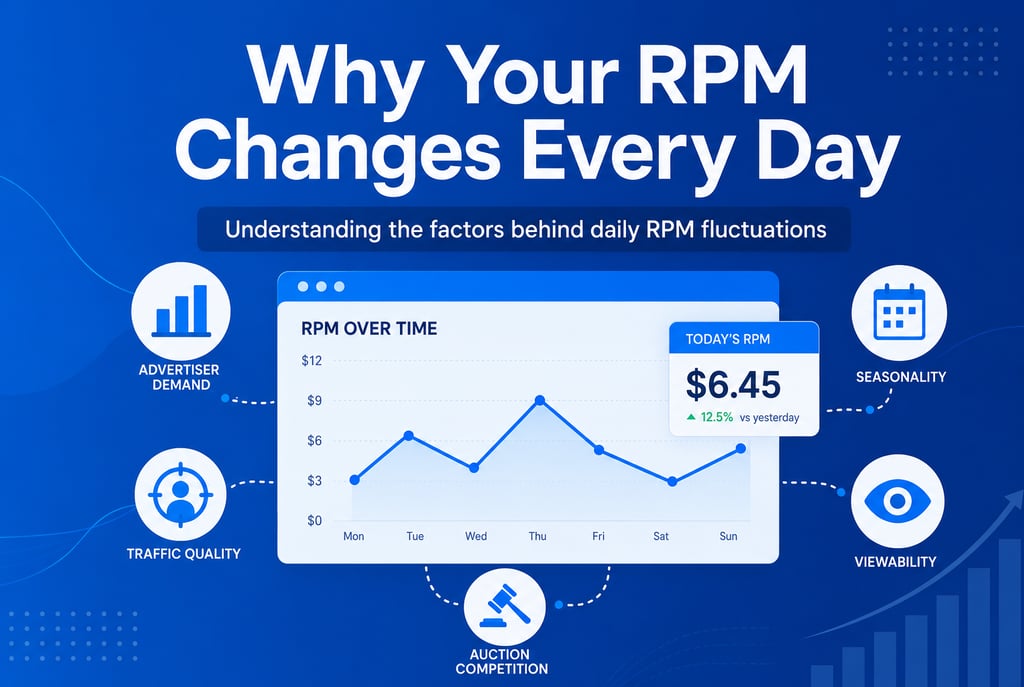
One of the most confusing parts of website monetization is watching RPM constantly fluctuate.
One day your earnings look strong.
The next day RPM suddenly drops, even though your traffic seems nearly identical.
For many publishers, this creates the impression that monetization is unpredictable or broken.
But in reality, daily RPM fluctuations are completely normal in programmatic advertising.
Understanding why RPM changes every day is essential if you want to build stable long-term ad revenue and avoid making the wrong optimization decisions.
RPM Is Influenced by Real-Time Advertiser Demand
RPM is not fixed.
It changes constantly because advertisers are continuously:
adjusting budgets
entering auctions
changing targeting
increasing or decreasing bids
Programmatic advertising operates through real-time auctions where advertisers compete for impressions.
This means your inventory value can shift daily depending on:
advertiser activity
market demand
audience quality
bidding competition
Even small changes in advertiser behavior can impact RPM significantly.
Seasonality Plays a Huge Role
One of the biggest RPM drivers is seasonality.
Advertiser spending changes throughout the year based on:
holidays
product launches
shopping cycles
quarterly budgets
For example:
RPMs often rise strongly during Q4
January commonly experiences major RPM drops
weekends frequently monetize differently than weekdays
This happens because advertiser demand fluctuates with business cycles.
Many publishers panic during seasonal drops without realizing these patterns are completely normal.
Traffic Quality Changes Daily
Even when traffic volume remains stable, traffic quality can shift.
For example:
more mobile users
more low CPM geography traffic
weaker engagement
shorter sessions
changing traffic sources
can all reduce advertiser demand and lower RPM.
This is why publishers should focus not only on traffic quantity, but also:
engagement quality
audience intent
monetization efficiency
Different Traffic Sources Monetize Differently
Traffic source quality matters heavily in monetization.
For example:
SEO traffic often monetizes strongly
returning visitors tend to perform better
high-intent audiences attract stronger bids
Meanwhile:
low-quality referral traffic
accidental clicks
viral traffic spikes
can sometimes reduce overall RPM because advertisers see lower conversion potential.
Fill Rate Can Change Constantly
Fill rate fluctuations are another major RPM factor.
If advertiser demand weakens:
more inventory may go unfilled
lower-paying ads may appear
bidding competition may decrease
This reduces effective inventory value even when traffic remains consistent.
Many publishers don’t realize that RPM declines are often tied directly to changing fill rates and advertiser competition.
Ad Viewability Affects Advertiser Bids
Advertisers prefer impressions users actually see.
If viewability changes because of:
page speed issues
layout adjustments
engagement shifts
scrolling behavior
advertisers may bid differently for your inventory.
Even relatively small changes in user behavior can influence RPM performance.
Why Advanced Publishers Focus on Stability
Experienced publishers understand that RPM fluctuations are unavoidable.
Instead of reacting emotionally to daily changes, they focus on:
long-term averages
monetization optimization
stronger advertiser competition
fill rate improvements
engagement quality
The goal is not eliminating fluctuations entirely.
The goal is improving:
overall RPM consistency
revenue efficiency
inventory value over time
Why Premium Monetization Helps
One reason larger publishers often achieve stronger RPM consistency is because they use:
premium demand sources
multiple SSPs
header bidding
advanced yield optimization
These systems improve advertiser competition and help reduce reliance on a single monetization source.
Platforms like AdPlunge help publishers connect inventory to premium demand and advanced monetization strategies designed to improve fill rate, RPM performance, and long-term revenue stability.
Final Thoughts
If your RPM changes every day, it does not necessarily mean something is wrong with your website.
RPM fluctuations are a normal part of programmatic advertising and are influenced by:
advertiser demand
seasonality
traffic quality
fill rate
viewability
bidding competition
Understanding these factors helps publishers make smarter monetization decisions and focus on long-term revenue growth rather than short-term fluctuations.
© 2025. All rights reserved.