
How To Increase Website RPM
Increasing website traffic is important, but improving RPM is often the fastest way to grow ad revenue. In this guide, we explain what RPM actually means, why some websites earn significantly more from the same amount of traffic, and the key factors that influence monetization performance — including engagement, ad placement, viewability, fill rate, and advertiser competition. Learn how publishers increase RPM through smarter monetization strategies and premium demand optimization.
MONETIZATION STRATEGIES
Matt
5/19/20262 min read
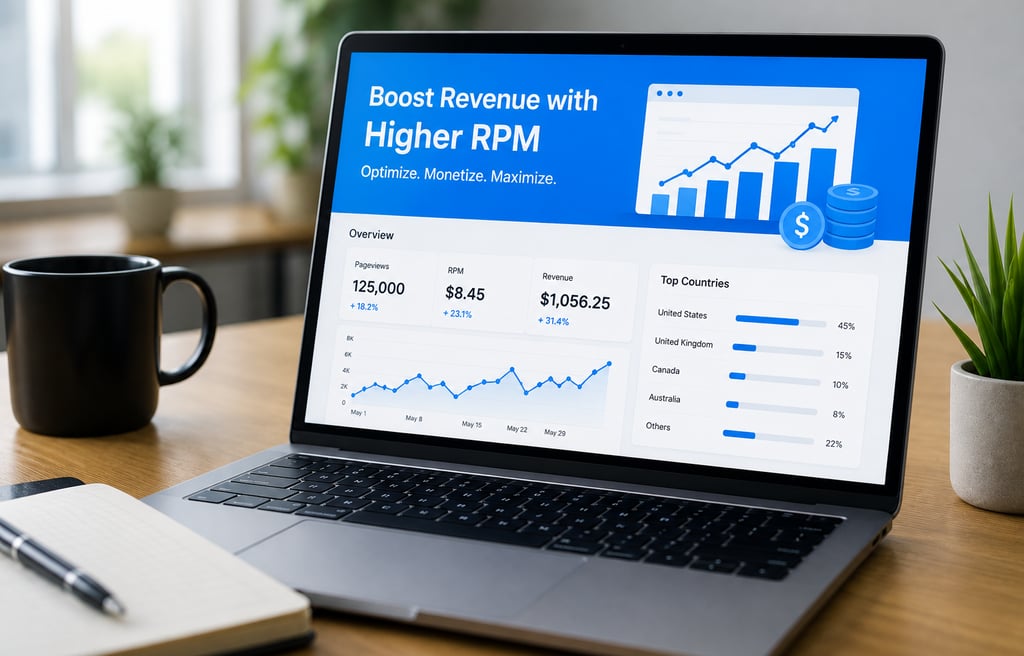
For many publishers, increasing traffic feels like the only way to grow revenue.
But in reality, some websites dramatically increase earnings without adding large amounts of new traffic at all.
The reason is simple:
RPM optimization often has a bigger impact on revenue than traffic growth itself.
Understanding how RPM works and what actually influences it is one of the most important parts of building a successful monetized website.
What RPM Actually Means
RPM stands for:
Revenue Per Mille (1,000 impressions)
It measures how much revenue your website generates for every 1,000 pageviews or impressions.
For example:
a $2 RPM means you earn approximately $2 per 1,000 pageviews
a $10 RPM means the same traffic earns 5x more revenue
This is why improving RPM can massively increase earnings without increasing traffic volume.
Traffic Quality Matters More Than Traffic Volume
One of the biggest RPM factors is traffic quality.
Advertisers pay more for audiences that:
are highly engaged
spend more time on-site
come from premium regions
have stronger buying intent
This means:
50,000 engaged visitors can sometimes outperform 500,000 low-quality visits in terms of monetization performance.
Traffic from countries such as:
the United States
Canada
the United Kingdom
Australia
often generates significantly stronger advertiser demand and higher CPMs.
Improve User Engagement
Engagement directly affects advertiser value.
Metrics such as:
session duration
pages per session
scroll depth
bounce rate
can influence:
advertiser bidding competition
viewability
fill rate
RPM performance
Publishers who focus on creating:
useful content
strong internal linking
better navigation
faster websites
often improve monetization naturally because users stay longer and interact more with pages.
Optimize Ad Placement Carefully
Ad placement is one of the most overlooked RPM factors.
Poor placements can:
reduce visibility
lower advertiser bids
hurt user experience
decrease engagement
High-performing publishers typically optimize:
above-the-fold placements
in-content ads
sticky units
mobile positioning
viewability zones
The goal is not simply adding more ads.
Instead, it’s about placing ads where they are:
visible
engaged with
advertiser-friendly
without harming the user experience.
Improve Ad Viewability
Advertisers prefer inventory that users actually see.
If users scroll past ads too quickly or ads load poorly, advertiser demand may weaken.
Improving viewability can often increase:
CPM
fill rate
overall RPM
This is why page speed and layout optimization matter so much in monetization.
Increase Demand Competition
One of the biggest RPM differences between small and advanced publishers comes down to demand competition.
When multiple advertisers compete for the same impression:
bids increase
CPM rises
inventory value improves
This is why many larger publishers use:
premium demand sources
header bidding
multiple SSPs
yield optimization strategies
instead of relying on a single monetization source alone.
Why Header Bidding Often Increases RPM
Header bidding allows multiple demand partners to compete simultaneously for inventory.
This typically improves:
advertiser competition
fill rate
inventory pricing efficiency
As a result, publishers often experience stronger RPM performance compared to relying entirely on traditional single-demand monetization setups.
Focus on Premium Traffic Sources
Not all traffic monetizes equally.
Some traffic sources generate:
weak engagement
low advertiser demand
poor conversion quality
while others attract significantly stronger advertiser bids.
Publishers focused on sustainable RPM growth usually prioritize:
SEO traffic
returning visitors
engaged audiences
high-intent content
over low-quality viral traffic spikes.
Advanced Monetization Makes a Difference
As websites scale, many publishers eventually outgrow basic monetization setups.
Advanced monetization strategies often include:
premium demand access
header bidding
improved fill rate optimization
direct advertiser competition
inventory optimization
Platforms like AdPlunge help publishers connect inventory to premium demand sources and advanced monetization strategies designed to improve RPM performance and maximize revenue potential.
Final Thoughts
Increasing RPM is not about chasing more traffic endlessly.
In many cases, the biggest revenue gains come from improving:
monetization efficiency
advertiser competition
engagement
viewability
inventory quality
Publishers who understand these factors are often able to generate significantly more revenue from the same amount of traffic.
© 2025. All rights reserved.