
Why Weekend RPM Is Lower
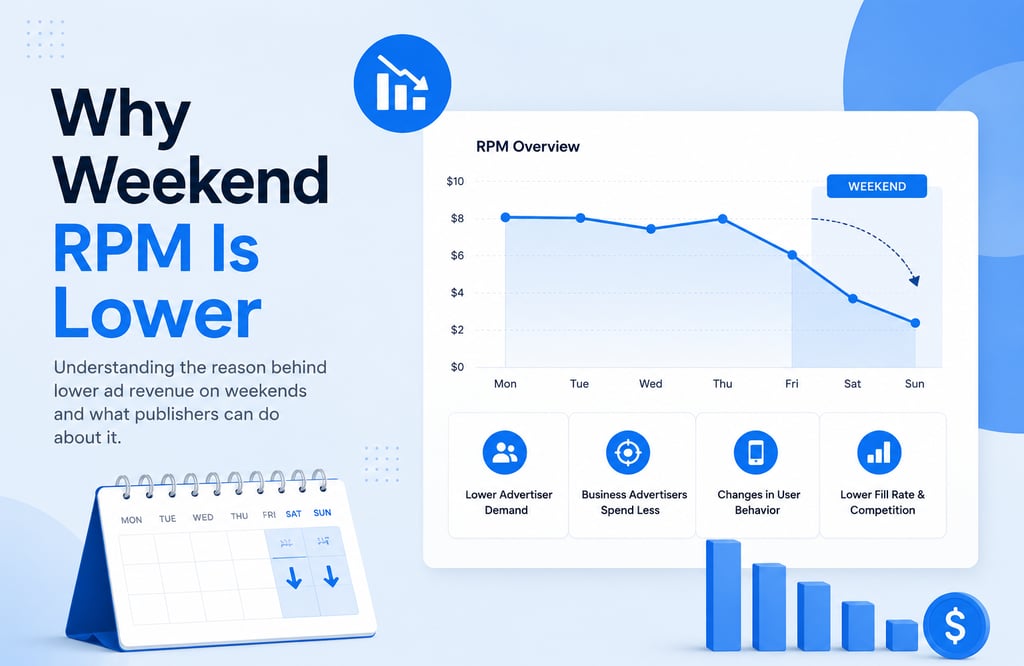
Many publishers notice their RPM drops on weekends, even when website traffic remains stable. This is a normal part of programmatic advertising and is largely caused by changes in advertiser demand, bidding competition, traffic quality, mobile usage, and user behavior. In this article, we explain why weekend RPM is often lower than weekday RPM and how publishers can better understand and optimize long-term monetization performance.
AD-PERFORMANCE ISSUESMONETIZATION STRATEGIES
Veronica
5/20/20262 min read
Many publishers notice the same frustrating pattern every week:
Revenue drops on weekends, even when traffic stays relatively stable.
At first, this can feel confusing. If users are still visiting your website, why would RPM suddenly decline every Saturday and Sunday?
The answer comes down to how advertiser demand changes throughout the week.
Weekend RPM fluctuations are extremely common in programmatic advertising, and understanding why they happen can help publishers make better monetization decisions and avoid unnecessary panic when earnings temporarily decline.
Advertiser Demand Changes Throughout the Week
RPM is heavily influenced by advertiser bidding activity.
During weekdays, advertisers are often:
running larger campaigns
targeting business audiences
spending daily budgets more aggressively
optimizing conversions during working hours
As a result, advertiser competition is usually stronger Monday through Friday.
On weekends, many advertisers reduce:
bidding intensity
campaign spend
audience targeting activity
This weaker competition often causes:
lower CPMs
reduced fill rates
lower overall RPM
even if traffic levels remain similar.
Business Advertisers Spend Less on Weekends
One major reason weekend RPM drops occur is because many advertisers target business-related activity.
Industries such as:
SaaS
finance
B2B services
software
productivity tools
often perform better during weekdays when users are actively working.
Because of this, advertisers in these industries frequently reduce weekend spend, which lowers auction competition across the programmatic ecosystem.
User Behavior Changes on Weekends
Website visitors also behave differently on weekends.
Compared to weekdays, users may:
browse more casually
spend less time engaging deeply
convert less frequently
interact differently with content
Advertisers monitor performance closely, and if weekend traffic tends to convert worse, bidding pressure may decrease.
This contributes to lower advertiser demand and weaker RPM performance.
Traffic Quality Can Shift
Weekend traffic composition often changes as well.
For example:
more mobile traffic
more casual browsing
more entertainment-focused behavior
different audience intent
can all impact advertiser bidding behavior.
Since some traffic types monetize more strongly than others, RPM naturally fluctuates depending on audience quality and advertiser demand.
Why Mobile Traffic Often Increases on Weekends
Many publishers see higher mobile usage on weekends.
While mobile traffic volume can increase, mobile inventory sometimes monetizes at lower rates than desktop traffic because:
screen space is smaller
viewability differs
user engagement patterns change
advertiser conversion rates vary
This can contribute further to weekend RPM declines.
Fill Rate Can Also Drop
As advertiser demand weakens on weekends, fill rate can decline as well.
This may lead to:
fewer premium ads being served
lower-paying fallback inventory
weaker bidding competition
Even small fill rate reductions can noticeably impact RPM and total earnings.
Why Experienced Publishers Focus on Long-Term Trends
One of the biggest mistakes publishers make is reacting emotionally to short-term RPM fluctuations.
Experienced publishers understand that:
weekday vs weekend RPM differences are normal
seasonality constantly affects monetization
advertiser demand changes daily
Instead of focusing on single-day performance, advanced publishers analyze:
weekly averages
monthly trends
long-term monetization efficiency
This creates a much clearer picture of actual revenue performance.
Why Premium Demand Helps Stabilize Revenue
Larger publishers often reduce RPM volatility by using:
premium demand sources
multiple SSPs
header bidding
advanced yield optimization
Increasing advertiser competition can help improve:
fill rate
CPM stability
inventory value consistency
Platforms like AdPlunge help publishers connect inventory to premium demand and advanced monetization strategies designed to maximize RPM performance and improve long-term revenue stability.
Final Thoughts
If your RPM drops on weekends, it does not necessarily mean something is wrong with your website.
Weekend RPM declines are a normal part of programmatic advertising and are usually caused by:
lower advertiser demand
reduced bidding competition
changing user behavior
traffic quality shifts
lower fill rates
Understanding these patterns helps publishers focus on long-term monetization growth rather than short-term fluctuations.
© 2025. All rights reserved.