
Why Mobile RPM Is Lower Than Desktop
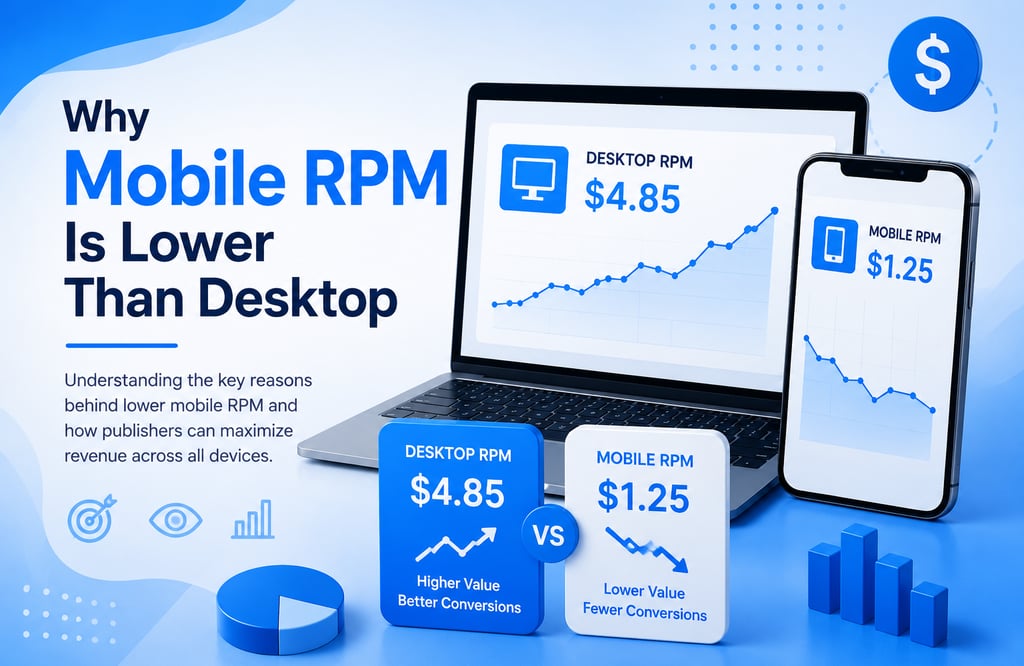
Many publishers notice that desktop traffic often generates higher RPM than mobile traffic, even when mobile visitors make up the majority of website traffic. In this article, we explain why mobile RPM is usually lower than desktop RPM, including the impact of user behavior, advertiser demand, viewability, screen space limitations, and conversion performance. Learn how mobile and desktop monetization differ, and how publishers can optimize revenue across both devices.
MONETIZATION STRATEGIES
Jessica
5/28/20263 min read
Many publishers notice the same pattern when analyzing their monetization data:
Desktop traffic often earns significantly more than mobile traffic.
Even when mobile traffic volume is much higher, RPM can still remain lower compared to desktop users.
This creates confusion for many publishers because mobile usage now dominates large parts of the internet.
So why does mobile RPM often lag behind desktop RPM?
The answer comes down to differences in:
user behavior
advertiser value
screen space
conversion performance
ad visibility
Understanding why mobile RPM is lower than desktop helps publishers make smarter monetization decisions and optimize revenue more effectively across devices.
Mobile Traffic Has Smaller Ad Inventory
One of the biggest differences between desktop and mobile monetization is screen size.
Desktop layouts allow publishers to display:
larger ad units
more visible placements
multiple inventory opportunities
Mobile devices have far less screen space.
This limits:
ad density
placement flexibility
inventory visibility
As a result, advertisers often have fewer premium placement opportunities on mobile compared to desktop.
Desktop Users Often Convert Better
Advertisers ultimately care about performance.
In many industries, desktop users:
convert more frequently
complete purchases more often
engage more deeply
spend longer on websites
Because desktop traffic often produces stronger conversion outcomes, advertisers may bid more aggressively for desktop impressions.
This increases:
CPM
advertiser competition
RPM
for desktop inventory.
Mobile User Behavior Is Different
Mobile browsing behavior is typically faster and more casual.
Compared to desktop users, mobile visitors often:
scroll quickly
spend less time on pages
multitask more frequently
bounce faster
This can reduce:
ad viewability
engagement quality
advertiser confidence
which impacts monetization performance.
Mobile Ad Viewability Can Be More Challenging
Viewability is extremely important in programmatic advertising.
Advertisers pay more for impressions users actually see.
On mobile:
rapid scrolling
smaller screens
shorter attention spans
can reduce viewability performance.
If ads remain visible for shorter periods of time, advertisers may bid less aggressively for those impressions.
Desktop Traffic Often Has Higher Commercial Intent
Many high-value online activities still happen primarily on desktop devices.
For example:
business research
SaaS purchases
financial services
B2B activity
enterprise software decisions
These audiences are often highly valuable to advertisers.
As a result, desktop impressions in certain niches can command significantly higher CPMs than mobile traffic.
Mobile Traffic Is More Abundant
Another major factor is supply.
There is simply far more mobile traffic across the internet.
When supply increases significantly:
advertiser competition may spread out
inventory becomes less scarce
average CPMs can decline
Desktop inventory is often more limited, which can increase its relative value.
Why Some Niches Perform Better on Mobile
Not all mobile traffic monetizes poorly.
Some industries perform extremely well on mobile, including:
gaming
social platforms
entertainment
short-form content
mobile apps
In these niches, advertisers actively target mobile users and may bid aggressively for impressions.
This is why RPM differences vary depending on:
audience type
niche
user intent
advertiser demand
Why Mobile Optimization Still Matters
Even if mobile RPM is lower, mobile traffic is still extremely important.
For many publishers:
most traffic now comes from mobile devices
user growth is heavily mobile-driven
search traffic is primarily mobile-first
Ignoring mobile monetization can severely limit total revenue potential.
Experienced publishers focus on:
improving mobile layouts
increasing viewability
optimizing ad placements
improving engagement
maintaining strong user experience
to maximize mobile revenue performance.
Why Advanced Monetization Helps Mobile Revenue
Because mobile monetization is more competitive, advanced optimization strategies become increasingly important.
Larger publishers often improve mobile RPM through:
premium demand partnerships
header bidding
multiple SSP integrations
yield optimization systems
mobile-specific inventory optimization
Platforms like AdPlunge help publishers connect inventory to premium advertiser demand and advanced monetization strategies designed to improve mobile RPM, fill rate, and overall revenue performance.
Mobile RPM vs Desktop RPM: The Bigger Picture
While desktop RPM is often higher, publishers should not focus only on device-level RPM comparisons.
The real goal is maximizing:
total revenue
inventory efficiency
long-term audience growth
In many cases:
higher mobile traffic volume can still generate stronger total earnings overall despite lower RPM.
Understanding this balance is essential for building sustainable monetization strategies.
Final Thoughts
Mobile RPM is often lower than desktop RPM because of differences in:
advertiser behavior
conversion performance
viewability
screen space
user engagement
inventory supply
Desktop traffic frequently attracts higher advertiser bids because users tend to convert more effectively and interact differently online.
However, mobile traffic remains extremely important for long-term publisher growth, and optimizing mobile monetization is essential for maximizing total revenue.
Related Articles
© 2025. All rights reserved.