
Why Your CPM Is Low Even With Good Traffic
Many publishers struggle with low CPMs even when their websites receive strong traffic and growing pageviews. In this article, we explain why good traffic does not always lead to high ad revenue, including the impact of audience geography, niche value, user intent, engagement, viewability, and advertiser demand. Learn what actually affects CPM performance and how publishers can improve monetization beyond simply increasing traffic.
AD-PERFORMANCE ISSUES
Matt
5/29/20263 min read
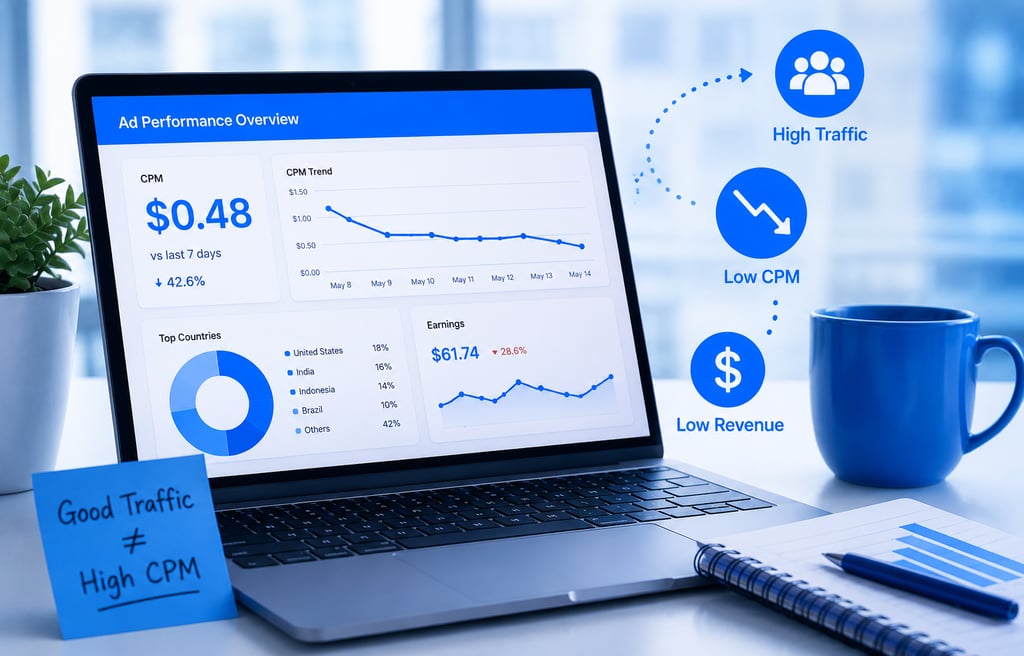

Many publishers assume that high traffic automatically leads to high ad revenue.
But then reality hits.
A website may generate:
thousands of daily visitors
strong pageviews
growing traffic trends
and still produce disappointing CPMs.
This creates one of the most common frustrations in digital publishing:
“Why is my CPM so low even though my traffic is good?”
The answer is that advertisers do not only care about traffic volume.
They care about:
audience quality
advertiser demand
user intent
geography
niche value
engagement
conversion potential
Understanding these factors is essential for improving monetization performance and increasing website revenue.
Traffic Volume Alone Does Not Determine CPM
One of the biggest misconceptions in publishing is:
more traffic = higher CPM
In reality, advertisers evaluate traffic based on how valuable the audience is to their business goals.
A website with:
lower traffic
but highly valuable users
can often earn significantly more than a site with massive but low-value traffic.
Advertisers are paying for:
conversions
purchases
leads
subscriptions
customer acquisition
not just pageviews.
Your Traffic Geography Matters
One of the biggest CPM factors is where your users come from.
Traffic from countries such as:
United States
Canada
United Kingdom
Australia
often earns much higher CPMs because advertisers compete aggressively for those audiences.
Meanwhile, traffic from lower-paying regions may generate weaker advertiser demand and lower bidding pressure.
This means:
high traffic volume alone may not increase CPM
audience location heavily impacts monetization value
Your Niche Impacts Advertiser Demand
Some industries naturally attract higher advertiser spending than others.
High-CPM niches often include:
finance
insurance
SaaS
business services
legal
technology
These industries compete aggressively for customers because conversions can be extremely valuable.
Meanwhile, lower-value niches may attract:
smaller advertiser budgets
weaker competition
lower CPMs
even with strong traffic numbers.
User Intent Is Extremely Important
Advertisers pay more when users show strong commercial intent.
For example:
someone searching for insurance quotes
business software
investment platforms
is often much more valuable than a casual entertainment visitor.
Even if both users generate pageviews, advertiser bidding behavior may be completely different.
This is why websites with highly targeted audiences often outperform broader entertainment traffic in CPM.
Poor Viewability Can Hurt CPM
Viewability refers to whether ads are actually seen by users.
If ads:
load too low on the page
are quickly scrolled past
appear in weak placements
advertisers may reduce bids.
Low viewability often causes:
weaker CPMs
lower demand
reduced monetization efficiency
Improving ad visibility can significantly improve inventory value.
Low Engagement Can Reduce Advertiser Value
Advertisers often prefer audiences that:
spend longer on pages
interact with content
engage deeply with websites
If users:
bounce quickly
leave immediately
consume very little content
advertisers may see the audience as lower quality.
This can reduce:
bidding competition
CPM
overall revenue performance
Mobile Traffic Often Earns Less
Many publishers receive the majority of traffic from mobile devices.
However, mobile RPM and CPM are often lower than desktop because:
screen space is limited
viewability can be weaker
conversion behavior differs
advertisers may bid less aggressively
This means a website can have strong traffic growth while CPM remains relatively low if most visitors are mobile users.
Fill Rate Problems Can Also Impact CPM
Sometimes publishers confuse:
RPM
CPM
fill rate
If advertiser demand is weak or inventory is not fully filled:
low-quality ads may appear
fallback demand may activate
effective CPM declines
Even websites with good traffic can suffer monetization inefficiencies if demand quality is poor.
Why Advanced Monetization Makes a Difference
Larger publishers often improve CPM performance by increasing advertiser competition through:
header bidding
multiple SSPs
premium demand partners
yield optimization systems
These strategies help:
increase bidding pressure
improve inventory value
maximize monetization efficiency
Platforms like AdPlunge help publishers connect inventory to premium advertiser demand and advanced monetization strategies designed to improve CPM performance across different traffic types and niches.
Why SEO Traffic Quality Matters
Not all traffic sources monetize equally.
For example:
highly targeted search traffic
often performs much better than:low-intent viral traffic
Visitors arriving from Google searches related to:
products
services
solutions
buying decisions
may attract stronger advertiser demand and higher CPMs.
This is why publishers focused on high-intent SEO content often generate stronger monetization results.
Why Some High-Traffic Sites Still Earn Poor Revenue
A website can generate massive traffic and still struggle with monetization if:
advertiser demand is weak
traffic quality is poor
engagement is low
viewability is weak
niche value is limited
This is why publishers should focus not only on:
growing traffic
but also on:
improving audience quality
strengthening monetization infrastructure
optimizing user engagement
targeting higher-value content opportunities
Final Thoughts
Low CPM with good traffic is more common than many publishers realize.
Advertisers evaluate audiences based on:
conversion potential
geography
niche value
engagement
commercial intent
advertiser competition
not just traffic volume.
Understanding these monetization factors helps publishers build smarter strategies focused on improving traffic quality, inventory value, and long-term revenue growth.
Related Articles
Why US Traffic Earns More Than Other Countries
© 2025. All rights reserved.