
Why Your RPM Dropped Overnight
If your RPM has suddenly dropped overnight, it can feel confusing and frustrating, especially when your traffic and content haven’t changed. In reality, RPM fluctuations are common in programmatic advertising and are influenced by factors like advertiser demand, traffic quality, seasonality, fill rate, and ad viewability. This article breaks down the real reasons behind sudden RPM drops and what publishers can do to stabilize and improve their earnings.
AD-PERFORMANCE ISSUES
Veronica
5/17/20262 min read
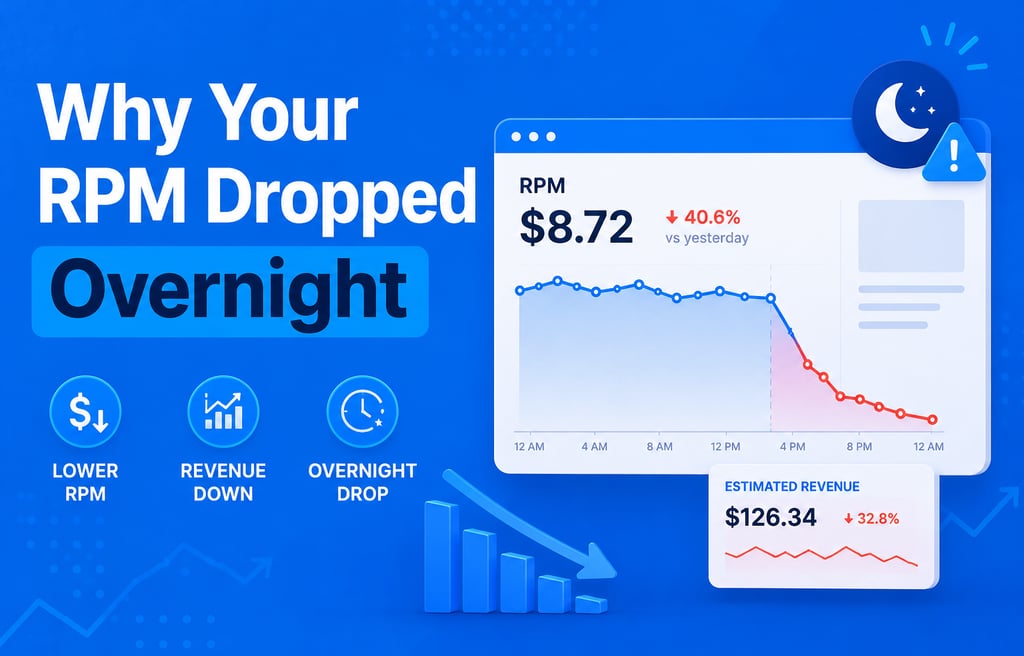
Few things frustrate publishers more than waking up to discover their RPM suddenly dropped overnight.
Your traffic may be stable. Your content hasn’t changed. Your ad placements are the same. Yet somehow, your earnings are significantly lower than they were yesterday.
This is one of the most common monetization problems publishers experience, and in many cases, the cause is not immediately obvious.
The reality is that RPM fluctuations are normal in programmatic advertising. However, understanding why they happen is essential if you want to stabilize and improve long-term revenue.
What RPM Actually Measures
RPM stands for:
Revenue Per Mille (1,000 impressions)
It represents how much revenue you earn for every 1,000 pageviews or impressions on your website.
RPM is influenced by factors such as:
advertiser demand
user geography
fill rate
viewability
engagement
traffic quality
bidding competition
Because so many variables affect monetization, RPM can fluctuate even when traffic remains unchanged.
Advertiser Demand Changes Constantly
One of the biggest reasons RPM drops overnight is changing advertiser demand.
Advertisers increase and decrease bidding activity based on:
seasonality
budgets
campaign performance
market conditions
audience demand
For example:
RPMs often rise during Q4 due to holiday advertising spend
RPMs frequently drop in January when budgets reset
This means publishers can experience sudden revenue shifts without changing anything on their websites, they just need to simply wait for the right seasons.
Traffic Quality May Have Changed
Even if your traffic volume stayed stable, the quality of your visitors may have changed.
For example:
more traffic from lower CPM countries
increased mobile traffic
lower engagement users
shorter session duration
weaker advertiser intent
can all reduce advertiser competition and lower RPM.
In many cases, publishers focus too heavily on traffic volume instead of monetization quality.
Lower Fill Rate Can Quietly Hurt RPM
Another major cause of RPM drops is fill rate reduction.
If advertiser demand weakens or your inventory becomes harder to monetize, more impressions may:
go unfilled
receive lower-paying ads
attract weaker bids
This reduces the effective value of your inventory even if traffic remains identical. Read this article if you are interested in knowing more about fill rates and how to fix lower fill rate issues.
Ad Viewability Plays a Bigger Role Than Most Publishers Think
Advertisers prefer placements that users actually see.
If viewability drops because of:
layout changes
slower page speed
poor ad placement
increased bounce rate
advertisers may bid less aggressively on your inventory.
Even small changes in engagement and visibility can impact monetization performance significantly.
Why AdSense Alone Sometimes Struggles
For growing publishers, relying solely on AdSense can create monetization limitations.
A single demand source may not always maximize:
bidding competition
fill rate
advertiser diversity
This is why larger publishers often move toward:
premium demand setups
header bidding
multiple SSP integrations
yield optimization strategies
The goal is to increase competition for every impression, helping stabilize RPM even during demand fluctuations.
What Advanced Publishers Focus On
Experienced publishers understand that RPM optimization goes beyond traffic growth.
Instead, they focus on:
demand quality
inventory competition
viewability
engagement
fill rate optimization
By improving monetization efficiency rather than only increasing traffic, publishers can build more stable and scalable revenue over time.
Platforms like AdPlunge help publishers connect inventory to premium demand sources and advanced monetization strategies designed to improve RPM consistency and overall yield performance.
Final Thoughts
If your RPM dropped overnight, it does not necessarily mean something is wrong with your website.
In many cases, RPM fluctuations are caused by:
changing advertiser demand
traffic quality shifts
lower fill rates
weaker bidding competition
reduced viewability
Understanding how these factors impact monetization is the first step toward improving long-term revenue performance.
© 2025. All rights reserved.